Detailed real experience of an Italian buyer (completely anonymous)
An Italian consumer, long-time PayPal user spending €500–1000 monthly on the platform for years, purchased an item worth approximately €165 on AliExpress (part of a larger order).
The package never arrived, despite the seller-provided tracking. After opening an “Item Not Received” claim, PayPal required a formal police report for loss or theft by unknown parties.
Note the absurdity of this “protection”: PayPal obviously has all the tools and authority (tracking data, etc.) to verify that the item was never delivered. In our personal opinion, this appears as a pretext and unjust waste of the user’s time, ultimately serving private interests against the user’s will and causing significant loss of time.
The buyer went to the Carabinieri station and encountered strong resistance (a frequently reported experience on Italian consumer forums). The officer initially refused entry in the rain, repeatedly asking what “filing a report for loss” meant (??). The officer seemed confused by the request, asking multiple times about the meaning of loss or theft, as if the buyer were unbalanced or making an unusual demand. Only after prolonged insistence – bordering on an argument and possibly involving a superior – was the report finally accepted and registered. To add insult, the officer re-typed the entire report despite pre-prepared copies being provided.
The buyer had to explicitly threaten – in the presence of witnesses – a complaint against the officers themselves under Article 328 of the Italian Penal Code (refusal of official acts) to obtain acceptance of the report, which is a mandatory legal duty.
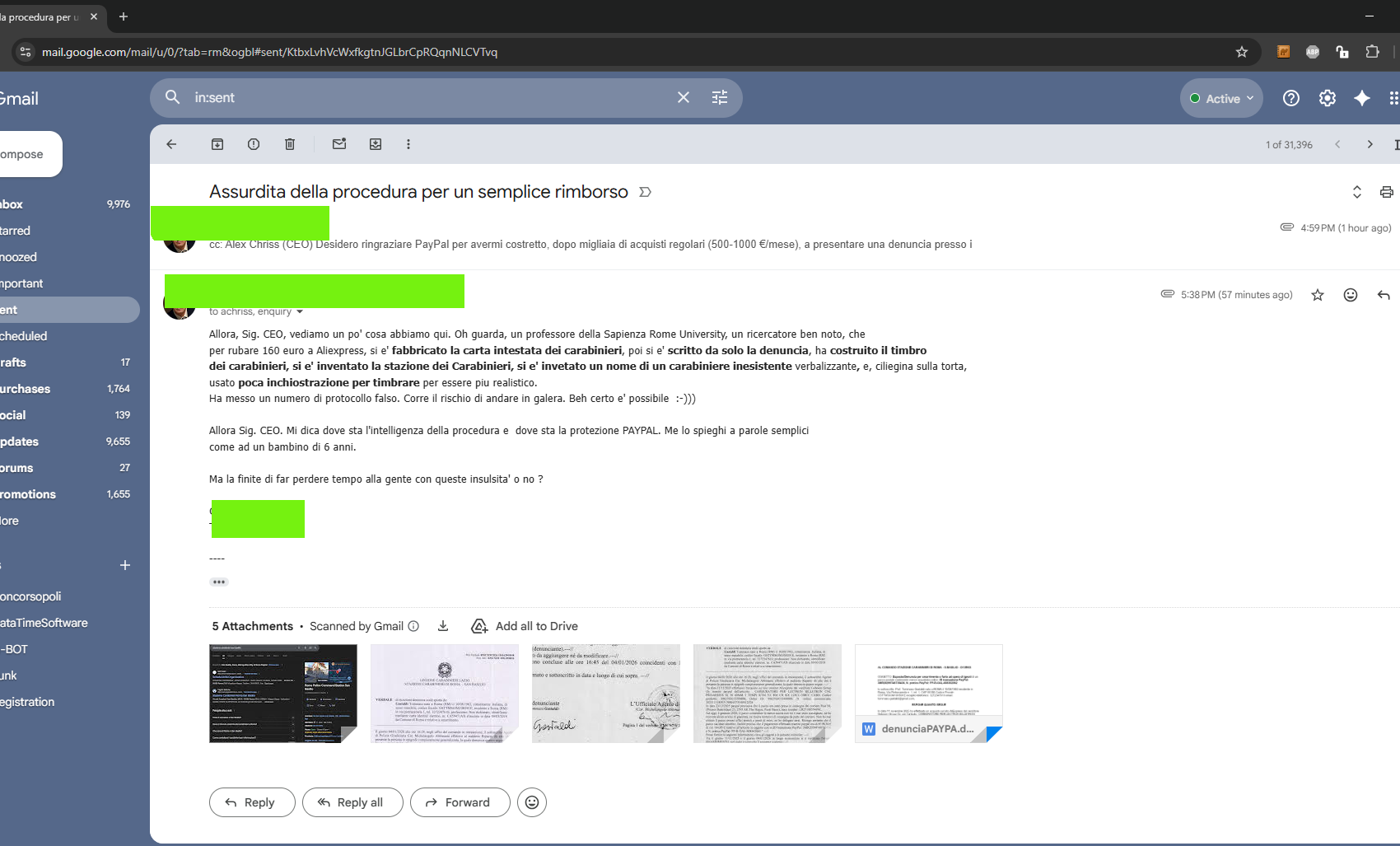
After uploading the report, PayPal contested the authenticity of the Carabinieri official stamp!! We have officially entered Fantozzi-level absurdity.
Refund was eventually granted only after several direct emails to PayPal CEO Alex Chriss. Disappointed by the excessively bureaucratic process for a simple e-commerce non-delivery, the consumer permanently closed the PayPal account and sent detailed feedback to support, copying the CEO.
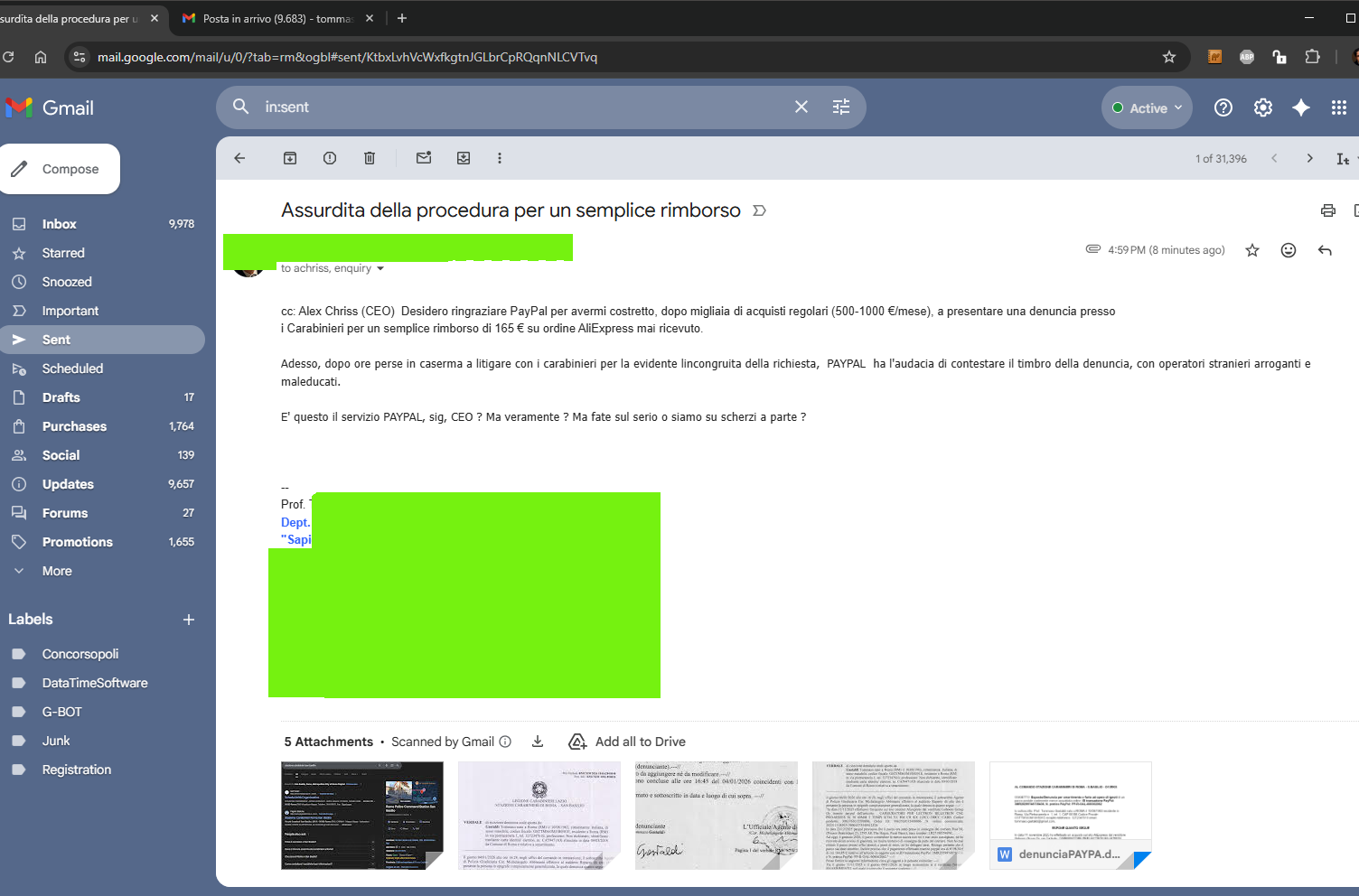
Example screenshot (all personal data fully redacted) of feedback sent:
This experience is far from isolated: similar cases are widely documented on Trustpilot, Reddit, and consumer forums (see Sources section).